Screen
Identify sensitivities, constraints and information gaps, and remove legally restricted, environmentally sensitive, socially unsuitable or technically unviable land.

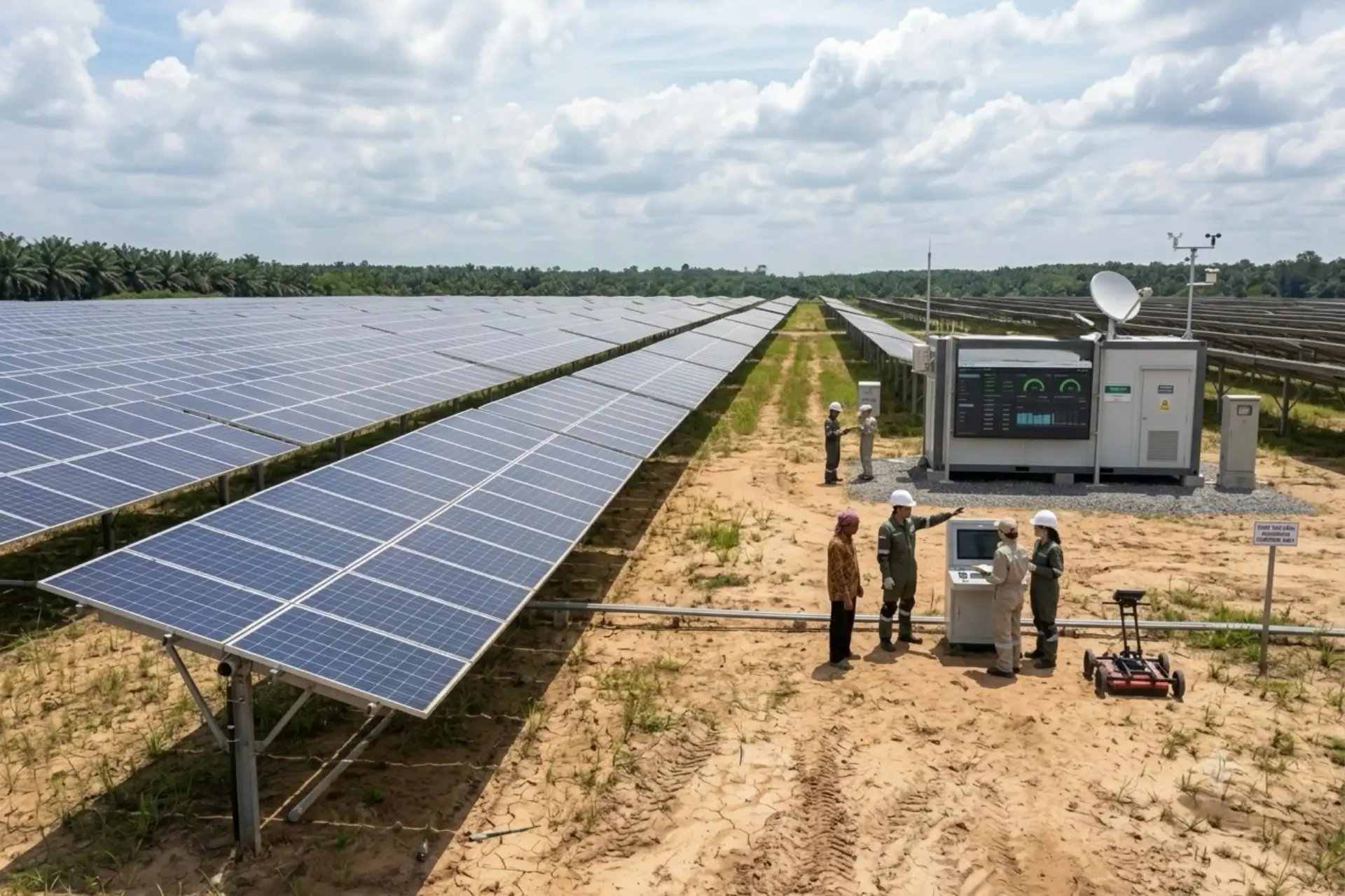
Responsible Development
Quantum integrates environmental and social assessment into project development from the earliest stages. Findings inform site selection, design, mitigation planning, investment decisions and delivery strategy, creating a clearer basis for responsible and bankable infrastructure.
Early Identification of Risks
Environmental and social considerations enter Quantum's development process as sites, technologies and delivery pathways are first assessed. Early identification allows material risks, sensitivities and stakeholder considerations to shape project direction before commitments are made and before design is fixed.
In line with Quantum's avoid-first principle, protected forests, peatlands, mangrove systems, settlements and unsuitable ground are screened out during land screening. Mitigation, minimisation and remediation apply to what remains after avoidance has done its work.
Informed Decisions
Assessment and Risk Management Process
Quantum applies a consistent process scaled to the project's size, location and exposure. It is sequential in structure and iterative in practice.
Identify sensitivities, constraints and information gaps, and remove legally restricted, environmentally sensitive, socially unsuitable or technically unviable land.
Commission or review appropriate studies and stakeholder inputs according to project scale, location and risk.
Incorporate findings into project configuration, land strategy, mitigation measures and implementation planning.
Apply internal decision processes, define responsibilities and translate commitments into contractual obligations.
Track material risks and commitments through development, construction and operations where applicable, and revise where conditions change.
Integrate performance data, field learnings, and evolving technical standards to refine future project methodologies, risk models, and asset performance.
Meeting Assessment Requirements
Formal environmental and socio-economic assessment is a standard condition of licensing for utility-scale generation across the markets and governments Quantum works with. In Indonesia, Quantum plans development around the applicable environmental and socio-economic instruments from the outset, so assessment findings inform project decisions.
Environmental Impact Assessment and Environmental Management Plan identify potential impacts, mitigation measures, monitoring procedures, reporting protocols and implementation responsibilities.
Socio-Economic Impact Assessment and Social and Economic Management Plan address employment, income generation, community development and potential effects on local, indigenous and vulnerable groups.